Creating Harmony Candles: When form finds its way
There are moments in creative work when something arrives—not through careful planning, but through presence. A kitchen counter. A moment of dissatisfaction. A child's art supplies. And suddenly, form finds its way.
This is how Harmony Candles came to be.
The Kitchen Moment
I had made a large candle - substantial, heavy, exactly what I thought I wanted. But standing in my kitchen, holding it, something felt wrong. It was too much. Too clunky. Disproportionate. The form didn't sing.
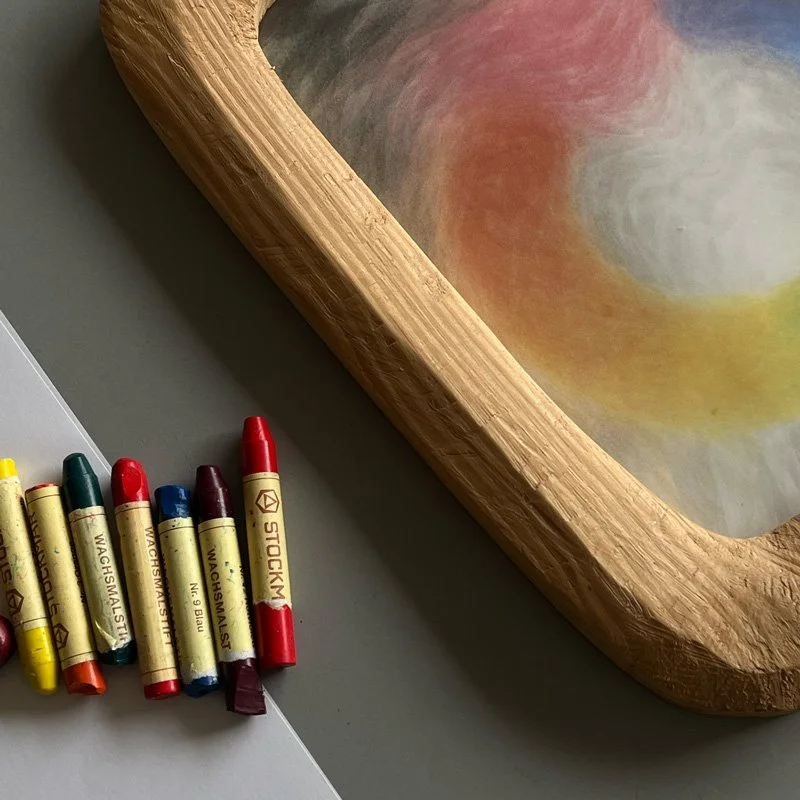
On the counter beside me lay my daughter's Stockmar beeswax crayons - those beautiful, soft colors that Rudolf Steiner educators have trusted for generations. The colors called. Without overthinking, I began again, blending these natural pigments into the wax.
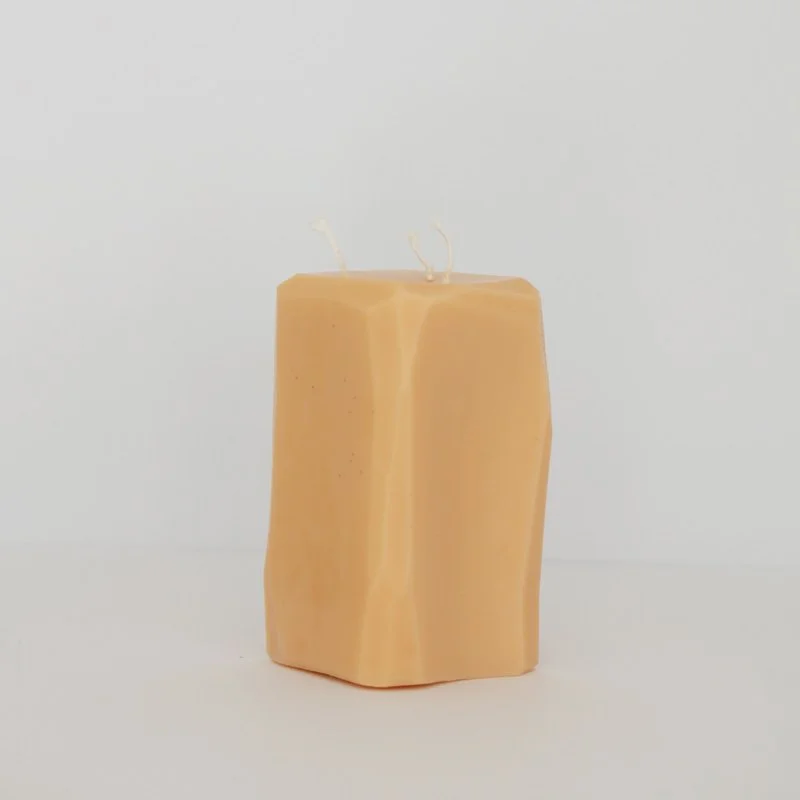
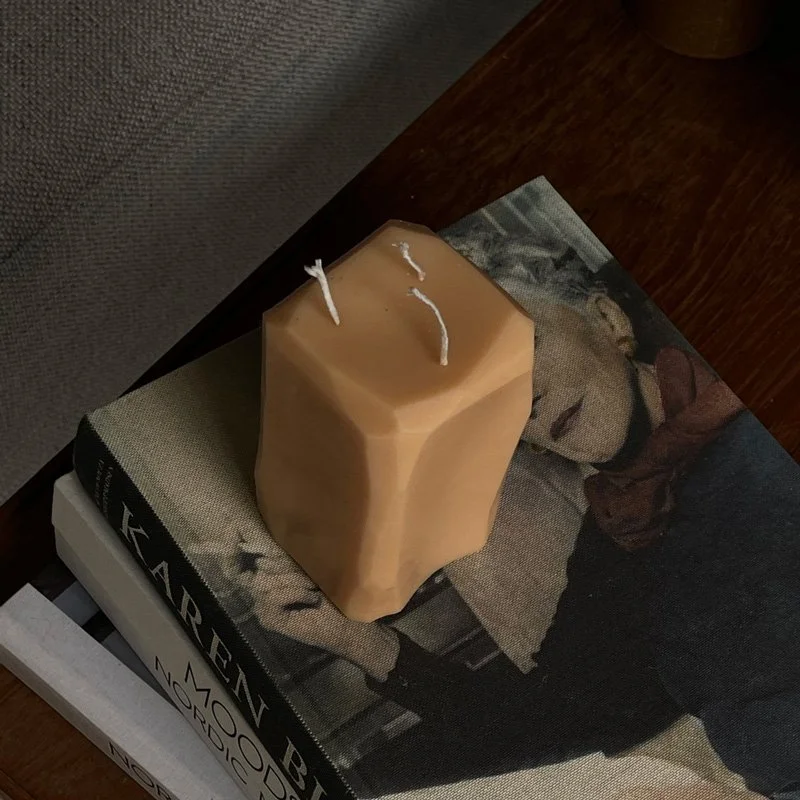
This time, I listened to proportion. To balance. To what felt right. The Harmony Candles emerged from that single afternoon - each one slightly different, each carrying its own warm earth tone. The colors drawn from Stockmar's palette of soft, living hues. Just the wax, the colors, and the proportions that felt like home.
Form as Philosophy
Rudolf Steiner believed that form itself carries meaning. Architecture wasn't merely aesthetic - it was a language of values, proportions, and human consciousness. The golden ratio, the curves that mirror natural growth, the angles that create stability or movement. Every line speaks.
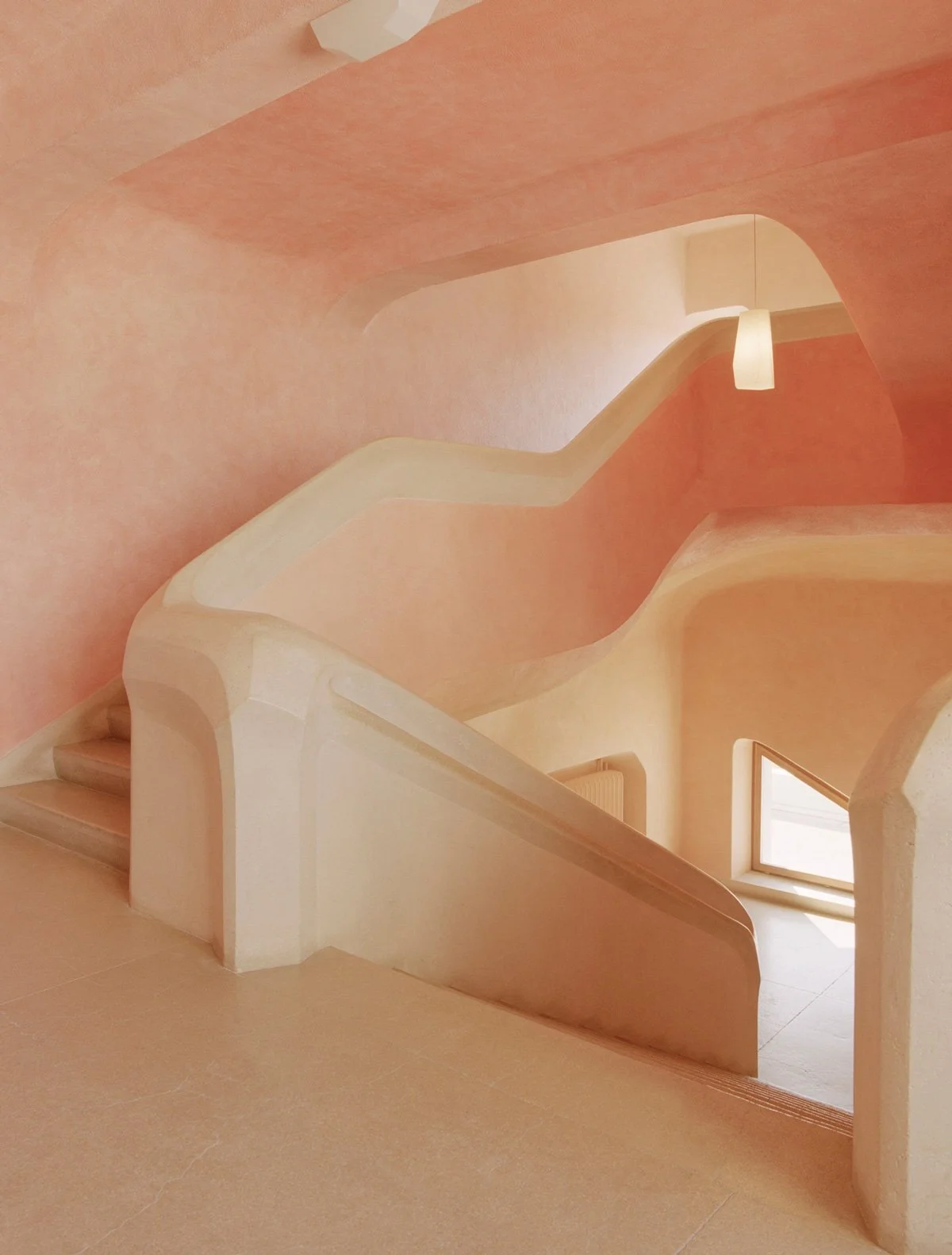
What draws me to Steiner's architecture is something specific: there are never sharp corners. Every edge is rounded, softened. Not out of decoration, but out of a belief that sharp angles cut through the human experience, while curves hold and contain. The rounded forms create a gentleness, a protection even.
Johann Wolfgang von Goethe understood color differently too. Not as mere pigment, but as a living experience. His color theory teaches that warm tones - the ochres, the golden ambers, the earthy beiges - hold particular power. They ground us. They connect us to the earth, to harvest, to the stability of roots and seasons.
This is what I wanted in the Harmony Candles. Forms without harshness. Proportions that breathe. Colors that speak of earth and time, not of commercial design.
The Ritual of Light
A candle that holds space. That's what the Harmony Candles do. Light it and watch how the flame finds its shape. How the light moves across the rounded form, creating soft shadows that shift with each breath of air in the room.
There's an architecture to that too.
The Colors of Being
Each Harmony Candle carries a different warm tone—not chosen from a palette, but emerged from the beeswax itself and the gentle layering of natural pigment. They're different enough to feel like siblings, not copies. Unique, like each season has its own particular warmth.
This is the philosophy of Rituals for Presence: that we don't need perfection, we need authenticity. We don't need manufactured uniformity, we need the honest variations of something handmade, something created in real time, in a real kitchen, with real attention.
What Remains
Sometimes I light one of them. The flame does what flames do. The shape holds the light differently than a clunky candle would.
I think about that afternoon in the kitchen—the dissatisfaction with the first, clunky candle, the sudden clarity when I started again. How sometimes we need to fail at the obvious thing before we find what actually matters.
These candles aren't perfect. Each one is slightly different from the others. The proportions aren't mathematically precise. But they're true. They hold what I was reaching for in that moment.
And that, I think, is enough.